Autumn Gear Guide
Find inspiration in our Gear Guide that will keep you out on your bike through wind or rain.
Download Now
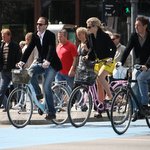
Infrastructure that is supportive of people on bikes, especially those who use bicycles for transportation, expands our daily travel choices, allowing us to find the most convenient, fastest way for our own particular needs.

From the First to the Last Mile
“That was surprisingly easy.” The clunk of the bike rack on the front of the bus and the whirr of the trains in the station above us echoed Megan’s words as she looked triumphantly up at me. My partner of five years and I had just completed a journey around Vancouver, BC. Our trip involved taking our bikes over water on ferries and riding on a mix of slow-trafficked streets, off-street trails and separated bikeways. The option to throw our bikes onto public transit greeted us at many different points along the way. Now we were riding home, and we were surprised at how ordinary and natural our travels seemed, especially by bike.
Infrastructure that is supportive of people on bikes, especially those who use bicycles for transportation, expands our daily travel choices, allowing us to find the most convenient, fastest way for our own particular needs. Like many people who live in cities, Megan and I needed to see that functional, comfortable and identifiable infrastructure – such as separated bikeways, secure bike parking, and bike racks on buses, trains and ferries – not only existed, but that it would connect us comfortably from destination to destination.
Save for walking trips, no trip involves just one form of transportation. We inevitably shift between two or more methods of travel – by foot, bicycle, bus, train, car – so we must be aware that every mode of transportation is connected and strive to make these connections seamless. A wave of cities around the world have already recognized the need for integrated transportation and the coordinated planning it takes to make this a reality. These cities are changing gears from the one-by-one developments of roads, bike routes and public transit systems to taking a more holistic, connected approach to infrastructure and urban development. The results show that these changes make cities more humane and vibrant – a new form of human-powered city.
Known as the first and last mile, the part of the trip that connects you to the door of your destination poses a problem for transportation planners. Public transit can efficiently transport a large number of people on specific routes, but it can’t connect to every door. Urban planners and transit authorities are considering bicycles as a way to connect the “last mile” in a sustainable way while decreasing overall commuting times.
Redesigning Cities with a Focus on Experience
A strategic shift gaining popularity in city planning is to look at how cities are experienced through all forms of transport and how design either aids or inhibits one form or the other. Rising economic and environmental costs are making many people reconsider their dependency on cars, while also making them want to live in places that are walkable and accessible to the entire family. As a result, the bicycle is gaining new ground as an attractive transportation choice, even in car-dependent North America.
“Cycling is truly a mode of transportation,” announced Michel Labrecque, Chair of Société de transport de Montréal (STM), as he began his keynote speech during Velo-city Global 2012 this past summer in Vancouver. In Montreal, including the bicycle as a transportation choice meant building infrastructure that would support the transportation cyclist as well as the recreational cyclist.
“We have been calling it the ‘transportation cocktail,’” explained Floriane Vayssières of Montreal’s agence metropolitaine de transport (AMT), using a term coined by Labrecque. Mixing a unique “cocktail” means choosing from an array of integrated transportation options including walking, car sharing, taxis, public transit, and now bicycles and bike sharing systems. While the resulting cocktail will vary from person to person, providing access to each ingredient is important and must fit the needs of those traveling throughout the city.
The real challenge facing urban development is finding ways to effectively and sustainably connect and move a rapidly growing urban population.
In San Francisco, Timothy Papandreou, Deputy Director of Transportation Planning for the Sustainable Streets Division of San Francisco’s Municipal Transit Agency, sees transportation choices as part of a “mobility menu” where each person chooses transportation according to his or her taste. The car is still the most popular mobility menu choice in the region, and he believes that to change tastes toward more sustainable choices like cycling, we must follow the money. The agencies that fund transportation projects need to shift their mind-sets to see cycling as a legitimate mobility option before they will open up funding opportunities. Papandreou also suggested that to attract more people to active transportation there must be a focus on fun, something San Francisco is pursuing through the development of interactive smartphone apps that track and display commuting information over all modes of travel.
Shifting the Culture of Moving People
Guillermo Peñalosa won’t stand for cities building infrastructure that is not accessible and comfortable for all ages. Peñalosa, who ushered in over 200 parks and introduced Ciclovía – car-free Sundays – in Bogotá, Colombia, is the Executive Director of the NGO 8-80 Cities. The organization advocates that everyone from the young (8 years old) to the aging (80) should be actively accommodated in all public spaces. Most contemporary street designs limit these groups from participating in city life by focusing on moving people at the greatest speed and providing mostly car-dependent spaces. “We have to stop designing cities as though everyone was a physically fit 30-year-old,” said Peñalosa.
Peñalosa, whose presentation at Velo-city Global 2012 received a standing ovation, showed research that found that the youngest and oldest members of society fear car-dominated streets, and that these streets present real threats to people inside and outside a car.
People like Megan won’t consider cycling on city streets in these conditions. As far as Megan is concerned, biking on urban streets is too dangerous, a challenge to be taken on by the most fit and fearless. This perception has relegated cycling to the fringes of urban transport in North America.
Andreas Røhl, manager of cycling projects in Copenhagen, understands Megan’s hesitation. “With cycling it is very much about perceived safety.” Small interventions, like separating bicycle lanes from traffic using textures, planters, barriers, or shielding it behind parking, are ways to make cycling feel more safe. And the feeling of safety is how people decide where and whether they’ll go by bike and foot. He also argues that cycling must be presented as more than just healthy and environmentally responsible to achieve mainstream acceptance. For Røhl, the goal is for people to cycle because it is a “convenient and normal way of getting to work on a Monday morning.”
Røhl has been working in Copenhagen to develop a culture of “civil cycling.” This open culture values convenience, inclusivity and quality of life, and welcomes new riders without regard for income or class. He feels that the “militant cycling” culture so often seen in North American cities, with its values of survival, sport, counter-culture, rebellion and environmental activism, creates barriers to new cyclists and much-needed political allies.
In Copenhagen, where cycling is seen as an integrated part of the mobility system, Røhl said, “Few people identify as a ‘cyclist.’ They just happen to be on a bike. …For them it’s a means to an end.”
Building an Integrated Network
Two policy changes in Vancouver, BC, over the past years have helped shift how people like Megan and me feel about cycling in the urban core. The first was creating locally controversial separated bikeways into the downtown, including routes over major bridges. These improved connections have measurably increased bike travel into and out of Vancouver’s populated downtown, but they’re are only the start of a modestly improved network – far too modest for Peñalosa, who called out the cycling-positive Vancouver mayor, Gregor Robertson, for not pushing a grander vision.
The second policy change is the regional transportation body TransLink’s push to improve cycling access by making it possible for people to bring their bikes on the entire regional transit system, though with some restrictions. “We have a large and diverse region, so we have to think about the region as a whole in making cycling accessible,” explained TransLink chair Nancy Olewiler. “If the goal is to have more than half of trips taken by transit, cycling or walking by 2040,” Olewiler said, “we need to remember that the adults of 2040 are children today.” These actions are ways to integrate cycling infrastructure into the urban fabric. Ultimately, this is the only way to make more humane, human-powered cities.
Both Røhl and Peñalosa attest that a rational network of defined and often separated cycle tracks is the key to promoting active transportation and making it an attractive choice. The connected network of cycle tracks in Copenhagen defines space for cycling. It connects with the regional transit system to allow commuters to get from door to door in a smooth, safe, comfortable, and above all, normal way.
To further promote the bicycle as a viable choice for commuting, Copenhagen is introducing new Cycle Super Highways, routes that connect the suburbs to the urban core and connect with the existing regional network of enhanced cycle tracks. Priority synchronized signals along the routes are timed for people on bikes, creating a “green wave” for cyclists traveling at 20 km/h. Many of these cycle tracks run parallel with or connect to transit routes and stations. “If you have a good combination of public transport with cycling, you have a more flexible daily life and more convenience,” says Røhl.
Jarrett Walker, transit systems expert and author of Human Transit, talks about the intrinsic potential for cooperation between cycling and transit. “The bicycle becomes an ideal tool for extending the reach of rapid transit stations [as exemplified in many European cities], reducing (but not eliminating) the need for slower bus and streetcar services. …Many cities and agencies are looking at how to expand the potential for these ‘cycle plus transit’ trips. These efforts include enhancing bicycle storage at stations as well as allowing cyclists to bring their bikes on board. These strategies have the potential to build the market for both cycling and public transit.”
At Velo-city Global 2012, Aske Wieth-Knudsen, head of the executive office at DSB S-train in Copenhagen, reported that actively promoting and including bicycles helped attract more riders to the regional train system in Copenhagen. Faced with 13 years of stagnant revenues and dropping government subsidies, the transit company shifted their strategic focus from station-to-station travel to considering their customers’ door-to-door trip. Partly through offering better bike parking at stations, connecting stations to the Cycle Super Highways and allowing riders to bring bicycles on trains at all times, the company’s annual revenue grew by 5.8 percent. Improving station and train access for bicycles wasn’t cheap, but the passenger revenue growth provides a strong business case for doing so.
The popularity of the DSB S-Train’s new bicycle accommodations meant the transit company needed to consider ways to handle the continued growth. They worked with the city to encourage riders to use separate bikes at each end of their train trips by improving bike parking and placing bike shares in accessible spaces at transit stations.
Bike Share Systems Extend the Reach of Public Transit
In Canada’s second-largest city, Montreal, QC, the bike share system, known as BIXI, has demonstrated that cycling is an efficient, relatively low-cost and sustainable way of expanding the reach of public transit. “BIXI is not a bicycle; it is an application of new technology to a mobility system,” said Michel Labrecque, chair of STM. His transportation cocktail now includes improving integration between riders of the public transit system with taxis, car sharing and especially with BIXI. Through station improvements, universal passes and discounts for members and transit pass holders, the result has been an increase in transit users modifying their trips to include BIXI as part of their regular route planning.
Adding bike share stations in cities around the world has meant replacing some parking for cars. Park and ride facilities, where drivers come in to park at transit hubs, are costly. Beyond the land value taken up, the cost of constructing a surface parking stall can be more than $10,000, and structured and underground parking often costs more than double that. Bicycle parking and rental stations at hubs are efficient ways of using space and offer an effective connection to destinations when appropriate cycling infrastructure exists.
Human-scale Interventions
Small investments and policy changes can go a long way to support and celebrate urban cycling. More open helmet laws, bike racks on cabs, and bike-minded infrastructure like footrests and handrails at stoplights are all part of making everyday people like Megan feel comfortable and making navigating the city on a bicycle feel normal.
Røhl says that in Copenhagen they grouped policy changes into three classes: “sticks, carrots and tambourines.” With the sticks they restricted personal vehicle use through strategies like taxation, parking restrictions, and walking- and cycling-only streets. Carrots made cycling easier with protected infrastructure, clearly marked routes, easily accessible bike parking facilities and access to public bike share. The third element, tambourines, were ways of celebrating bike culture and “thanking citizens for riding their bikes” with festivals, public art, facilities for specialized cargo bikes, and simple actions like angling garbage bins to face cycle traffic. That celebration is about cycling being special and important, while at the same time promoting it as ordinary and everyday.
But all the sticks, carrots and vigorously shaken tambourines will not have any meaning if the network doesn’t connect people to places they want to go to.
Making and Linking Places
Gil Peñalosa demands “places with spice”: spaces with the vibrancy that comes from interacting with others. We want to be where the action is, and these attractive places define the positive nature of the city – Peñalosa’s “spice” of urban life.
Public spaces that are safe and welcoming for all ages are also connected to adjacent neighborhoods in safe and welcoming ways. In New York, where new real estate for public space is a rarity, pioneering NYC Department of Transportation Commissioner Janette Sadik-Khan has fostered a rebirth of public space in a car-congested city. Her pilot projects for pedestrian and cycling infrastructure are dramatically reframing the use of public space across the city. Pedestrian plazas, separated bicycle lanes and places for people to sit outside are taking over space previously dominated by motorized traffic. While these changes haven’t always been accepted with open arms, the explicit inclusion of people on bicycles and on foot as part of the formal transportation network is legitimatizing active transportation in a city previously known for its crawling motorized traffic and crowded subways.
The Ride Home
Holding her bike in the transit interchange, my understandably tired-looking girlfriend suggested we finish our long day of exploring and head home on the train. “I’m not feeling hardcore enough.” I agreed with Megan. The warmth of the train was far more welcoming than the darkness, rain and hills that awaited our trail-weary bodies. The small but increasing changes towards transit integration have made a world of difference for budding civil cyclists like us.
The bicycle infrastructure that passes by our house, connects us to where we live, work and play, and allows us to link to farther-away neighborhoods by transit has made using our bicycles feel like a normal way to get around. As the network outside our doors becomes more complete and easier to use, more people like us will see bicycles as an attractive transportation choice. We don’t feel like our transportation choice has made us “hardcore,” we feel like we’re standing on the edge of an exciting new normal.
Urban planner and designer Brendan Hurley focuses on adaptive urban change to make vibrant and sustainable communities. He and graphic designer Megan Finnerty live and work in Vancouver.
urbancondition.ca | spacingvancouver.ca
 Ask the Advocate – Greater Reach
 Spotlight on Bicycle Fashion Designers – Riyoko
 Bicycles in Sao Paulo
 Women Really Need to Talk About Taking Back Our Streets in Portland and Beyond
 Notabag: The Reusable Bag Solution
 My Two-wheeled New Year’s Resolutions
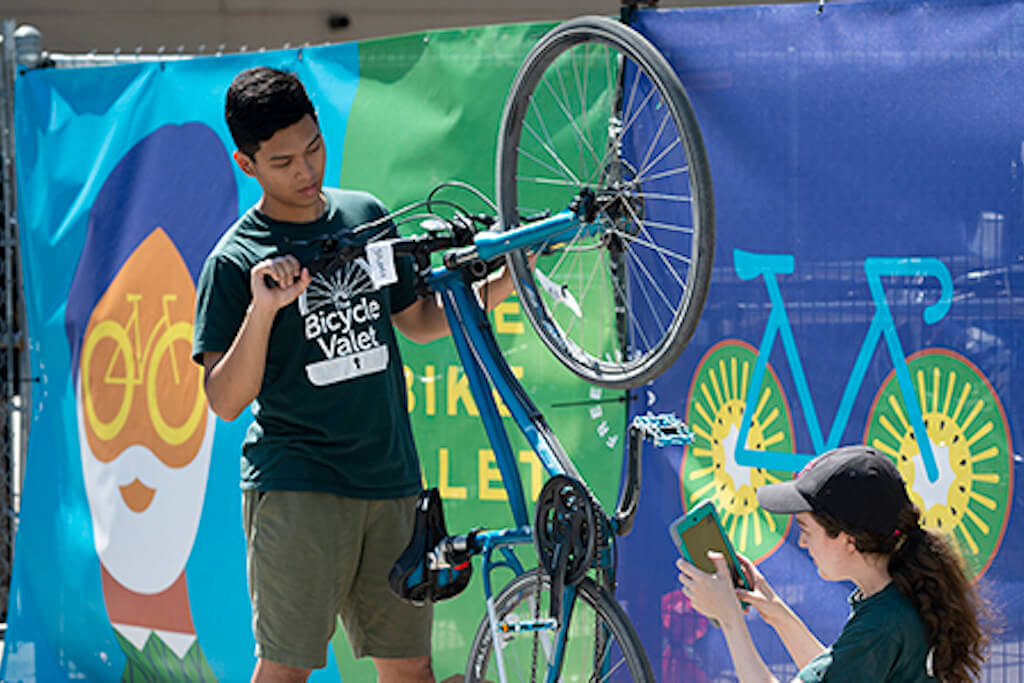 Downtown Vancouver has a free bike valet operating all summer
 Hill and Ellis Birkdale Pannier Review
Find inspiration in our Gear Guide that will keep you out on your bike through wind or rain.
Download Now
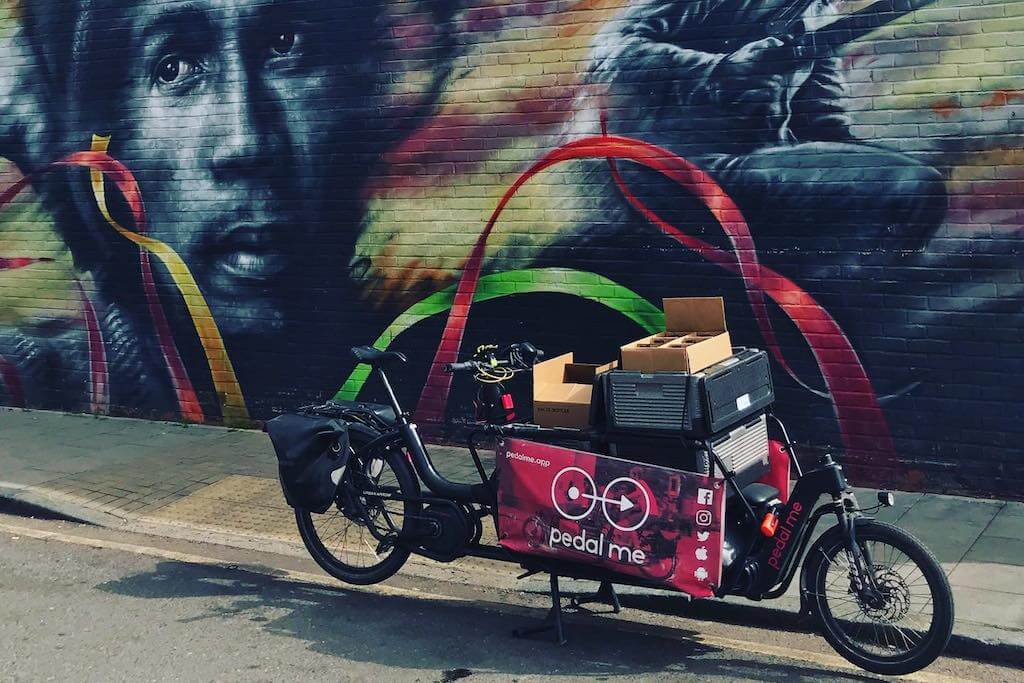

Why not shift both cultures of moving people and things? 🙂 the first last mile problem is not just to the door, it is to the bed and includes showers baths hoisting stairs lifts toilets.
Why are we not moving light goods on passenger trains – off peak at night? Swiss postal service does.
We are not yet thinking things through holistically. Why not cargo on local timetabled routed electric vehicles, able to carry people and cargo bikes?
Comments are closed.