Autumn Gear Guide
Find inspiration in our Gear Guide that will keep you out on your bike through wind or rain.
Download Now
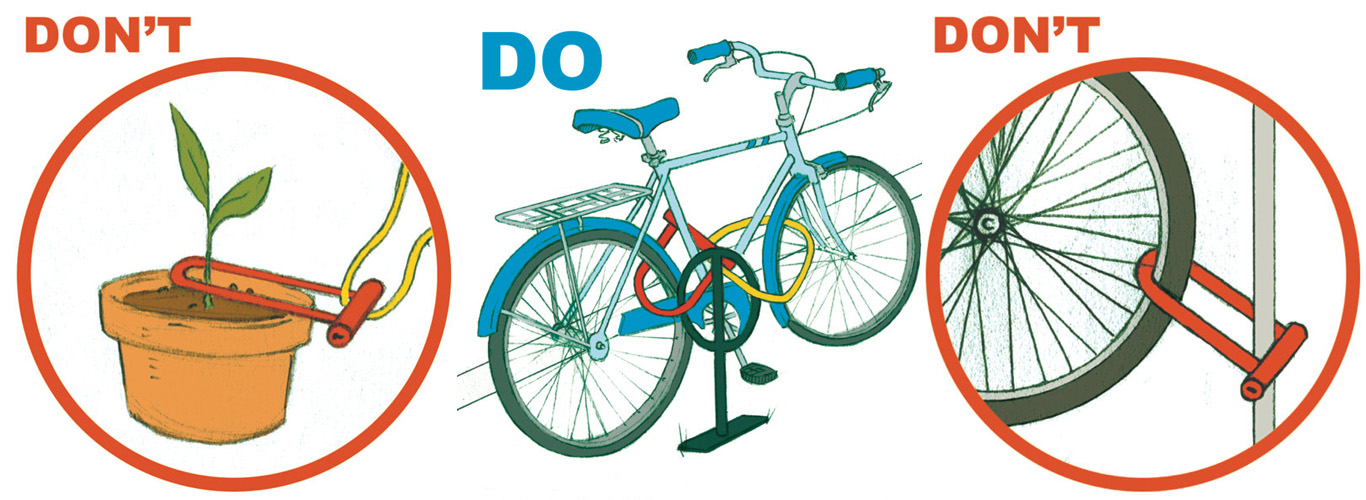
How to lock your bike up to prevent bike theft – riding home without a seat is embarrassing, riding home without a wheel is impossible.

A man sauntered into our neighborhood bike shop and examined the display of locks. He hefted the most impressive one, a massive, heavy chain, looked at the price tag and frowned. “I don’t know if I can afford it,” he said to the shop owner.
“Can you afford to have your bike stolen?” the owner replied.
Illustrator: Thomas James
This is, in a nutshell, the basic logic of bike security. Bikes are light and easily transported, convenient qualities not only for bike owners, but also for bike thieves. They’re also easily resold, infrequently tracked down by law enforcement, and too often perceived as an “assumed loss,” – many people simply expect to have their bicycle stolen at some point. As a result, bike theft is an absolutely massive – and growing – problem in many cities worldwide.
As the number of bicycles on our streets increase, so too do the number of people trying to make a quick buck off of their vulnerability. But your bicycle doesn’t have to be an assumed loss. By taking a few simple precautions and investing in a decent lock or two, you can basically ensure your precious ride will always be exactly where you left it.
The first step in securing your bike is choosing the right lock. There are several good options out there, depending on your needs.
My childhood bike lock was a sparkly pink cable combination lock the thickness of a drinking straw. At some point, I realized it could be snipped in half with a pair of elementary school scissors. (The combination could also be inferred by the loud clicking sound that the correct numbers made.) Such locks are largely symbolic gestures. Flexible cable locks are easy to use and good for locking to difficult structures, but they often fall into this “easy to breach” category. In Amsterdam, I watched an enterprising gentleman whip out bolt cutters and chop my much sturdier cable lock in two casual strokes.
If you live in a city and you want to hang onto your bicycle, a cable lock should only be considered as a wheel lock or secondary security, rather than your primary lock. They’re simply too easy to snip, and even an inexpensive bicycle can be an attractive option to thieves if the barrier to stealing it is so easily trespassed.
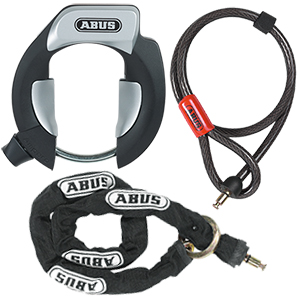
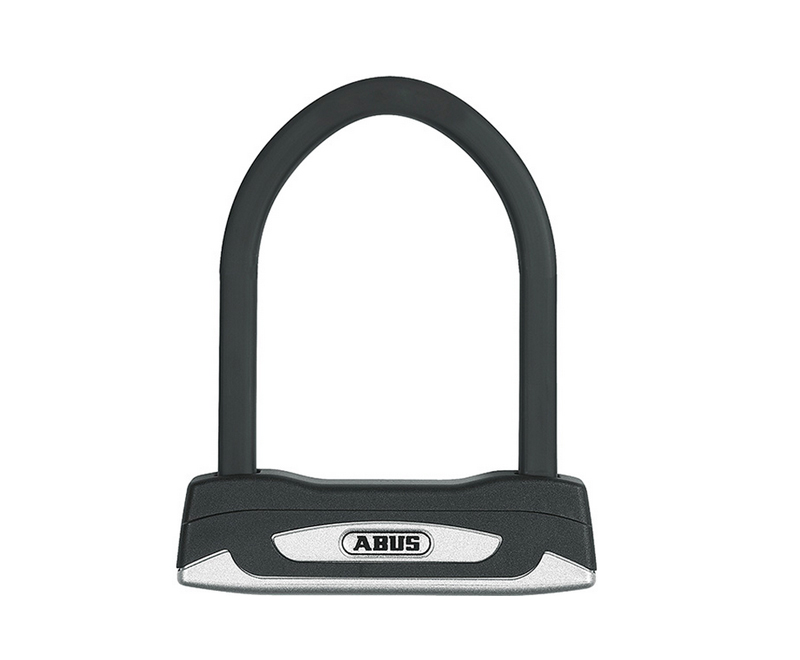
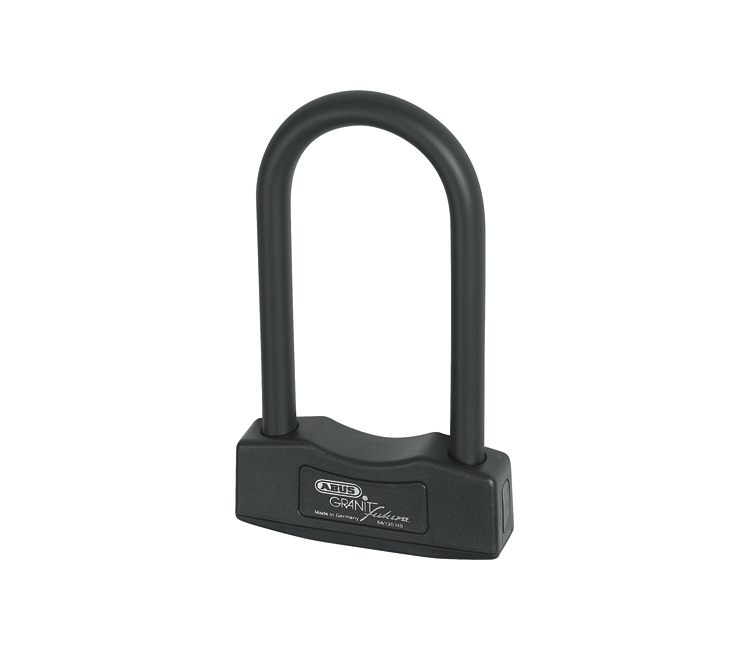
U-locks are the most popular lock option for urban riders – so much so that the image of a small U-lock in the back pocket or belt loop has come to be emblematic of bike messengers and fixie culture. They’re strong, reasonably lightweight, and easy to transport. However, the shape and inflexibility of a U-lock does limit what you can lock to, which is what leads many riders to cables or chains. ABUS offers a range of different sized high security U-locks from small and compact to ones that will secure both your tire and frame.
An ultra-thick, heavy chain with a strong locking mechanism is a great, although cumbersome, option. It makes you look paranoid, but if you don’t mind the extra weight it is flexible and very effective.
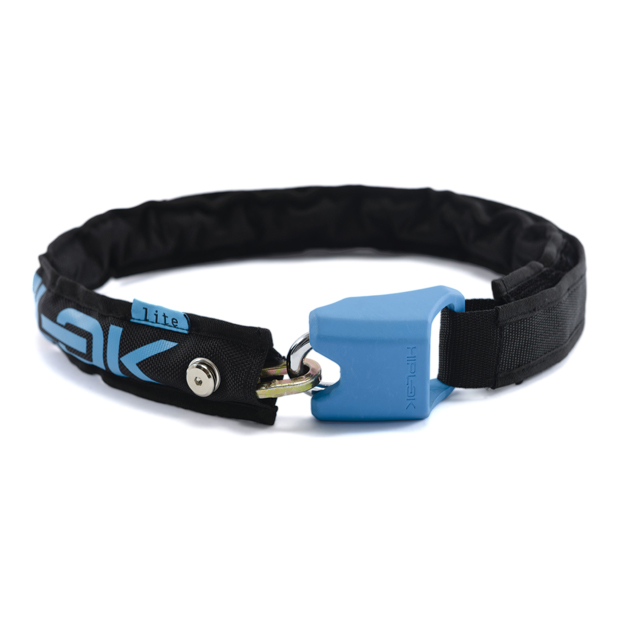
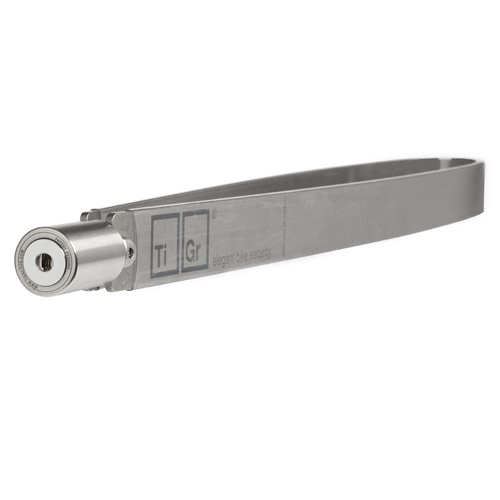
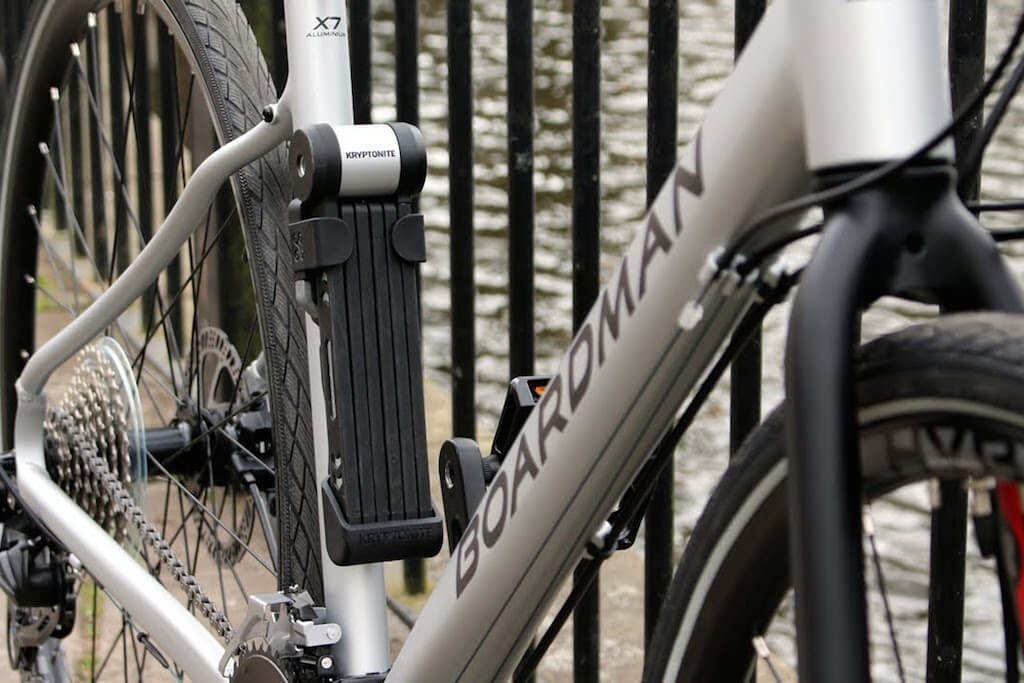
Beyond the standard U-lock, chain, and cable categories, there are a number of types of locks worth looking into. Folding locks, invented by ABUS and since recreated by a few other brands, offer the security of a U-lock with the flexibility of a chain. They’re also lightweight and very easily transported, quickly making them the favourite of urban and recreational cyclists alike.
Frame locks, which have long been popular in Scandinavian countries, are slowly gaining in popularity in North America along with the growth in the upright bike market, although in most North American cities should only be considered a secondary security measure.
Component locks, a solution for securing bicycle components such as your saddle and wheels are gaining in popularity as well. These are great solutions if your city bike currently uses a quick release mechanism which thieves like to target as they make your components very easy to steal. ABUS offers a stylish component lock called NutFix which protects both wheels and the seat post against would-be thieves.
To help narrow down what type of lock best suits your needs, check out our illustrated guide to choosing the right bike lock.
Lock in hand, you’ll next need to decide what to lock to. In many cities, entire neighborhoods lack dedicated bike parking. When bike racks or locking posts aren’t handy, streetlamps are a decent option – as are sturdy street signs over six-feet-tall, or short parking meters with enough bulk at the top to ensure thieves won’t be able to simply lift the locked bike over the meter. Avoid locking to removable poles (some street signs are screwed in at the bottom with removable bolts, rather than cemented in), or cables and other infrastructure that can be snipped such as a chainlink fence.
If you want to be extra neurotic (and why not), do a quick check of the bike rack to ensure it hasn’t been tampered with. In a few extreme cases, thieves will cut through a bike rack with a angle grinder at night, then cover the cut with a sticker. The next day when people lock up to the rack, the thieves can come around, remove the sticker, and simply slip the locked bike off the rack.
If you’re locking to other infrastructure such as a stairway handrail or private fence, be considerate of others and also aware that building security employees sometimes remove bikes that seem hazardous. If a private fence has a “no bikes” sign, respect their wishes. Not only will it prevent them removing your bicycle for you, but it’s the considerate thing to do.
While locking up, make sure your lock actually goes through your frame’s triangle – rather than, say, around your seat post, where it can be conveniently slipped off. You may laugh, but it happens. Walk around any city and pay attention to the bike racks, and you’ll soon notice a staggering number of front wheels locked on securely, with the remainder of the bike nowhere to be seen. Through the frame, every time!
For the absentminded among us (guilty), a quick tug on your bike after you lock it can be a great way to ensure that you’ve a) got the lock through the frame, and b) got the lock onto the post. More times than I’d care to admit, I’ve hastily locked my bike up while running errands only to return and find I simply attached the lock to the frame, failing to actually fasten it to the rack it’s casually leaning against. Luck in that regard can only last so long.
Consider also what to do about the parts of the bike that aren’t secured by your lock. If your wheels and seat are easy to remove, try running your lock through a wheel as well as your frame and securing the quick-releasable elements separately or taking them with you. There are locking systems, such as Pinhead, which are designed to secure the small, removable components of your bike, and carrying a cable or cable lock is a great way to secure your wheels.
Riding home on a bike with no seat is embarrassing, and riding on a bike with no wheels is impossible.
While comprehensive and reliable data on the subject is scarce, the minimal data available indicates that in most cities, the majority of bike thefts actually take place in crowded areas. While it would seem like well-lit, well-trafficked spots would be safer on the premise that it’s stressful to try and subtly saw through a lock in front of a teeming crowd of pedestrians, bike theft is so quick and efficient that thieves can operate unseen in a crowd, and many people are less careful with their locking style when they feel their bikes are being “watched over” by the crowd.
So, whether you prefer to lock up on back streets or Main Street, the main thing is to ensure you’ve locked your bike well.
As to the particularities of the position, lock your bike upright and well out of the path of cars, street sweepers, and other heavy machinery. I’ve seen an SUV sweep up onto a curb and right over the wheel of a Schwinn locked to a bike rack; the wheel issued a haunting cry as it folded.
Also be cognizant of pedestrians and other road users. While it may seem obvious, too many people lock their bikes straight across a frequent walking path, awkwardly close to a doorway, or in an obtrusive manner to city infrastructure that needs to be used by people, such as a bench or a garbage can. Be respectful of other people’s used of shared space, and as a result they’ll be more likely to respect bicyclists.
Similarly, with other bicycles, good locking manners are mostly intuitive. Don’t lock your bike to someone else’s (unless you know it’s OK with them, and they can get a hold of you when they want to leave). Avoid jamming your bike up against someone else’s in a crowded rack or bike pile, and make sure your bike isn’t blocking (or tangled up with) other bikes.
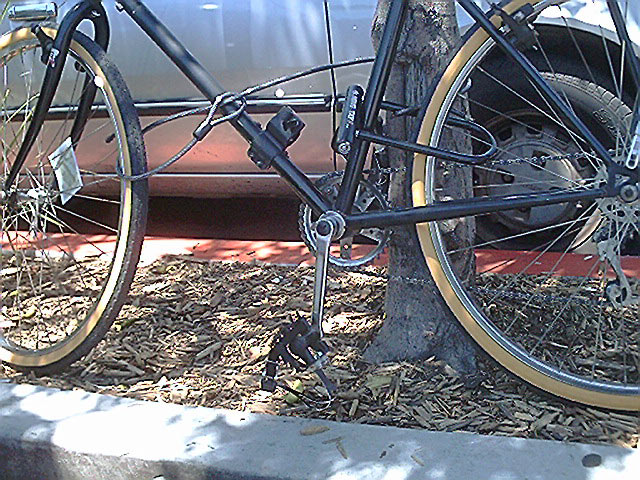
Finally, we come to the issue of trees. While most people agree that locking to trees should always be a last resort, there remains a small division in the bike community on whether that option should ever be called upon at all.
Videos like this one, showing a man cutting a tree down in order to steal the bike locked to it, provide an extreme example of why we shouldn’t lock to trees. But even in less egregious cases, locking up to a tree can damage the bark, break the branches, and otherwise stress the tree.
As a general rule, locking up to trees should be avoided. Ride a little father to find something metal to lock up to. In some cities, the municipality will wrap tree trunks in a plastic barrier to keep them safe from bicycles, but a better option than using that “infrastructure” would be to call your council member and request real bike racks instead.
If you absolutely must lock up to a tree, do so gently. That’s a living thing friend, treat it with respect!
Find inspiration in our Gear Guide that will keep you out on your bike through wind or rain.
Download Now

nice nice nice nice nice nice ncie ncei cenicnei ncie ceinceinc
wow!
What a nice article you have written.
there are many tips and tricks come in mine and we invent for secure, but with us, the burglar is inventing day by day the new tricks to cut the lock.
So, what should we do for that?
The article should have mentioned combination locks, as many times, people only move one cylinder one position when locking. Or the spin all cylinders just one position. Or the ones with letters instead, so that the combination is so logical. Also, don’t spend more than 20% of bike value on lock, as it is overkill (thieves steal what they can quickly convert to cash).
I caught a theft in progress, calling 9-1-1 as it was unfolding across my street. The police responded so quckly, that they intercepted the purloiner two blocks away. The thief found the bike locked to a no-parking sign, and avoiding breaking anything by bending the sign back so the U-lock could pass over it. Since the owner had locked only frame, the bike could be ridden away.
Many bicycles today come with quick release hub skewers and/or quick release seat post bolts. These arrangements make for easy removal or adjustment of the seat and easy removal of the wheels for repairing punctures. However, they also make wheels and seatposts vulnerable to theft – even if the frame of the bicycle is securely locked. Consider using “pitlock” skewers and seat post bolts or a similar product to make your seatpost and wheels difficult or impossible to steal. In addition to these advantages, having the “key” to these bolts helps establish that the bike is yours. Also, consider putting a copy of your driver’s license and/or passport in the interior of the seat post to establish that the bike is yours. You should register the serial number of the bike with local and national bicycle registries. Also, take a picture of you with the bicycle and keep the picture available. Finally, learn the location of parking garages that have facilities for bicycles. Not only does this discourage thieves because of limited access and security cameras, it also keeps your bicycle out of the elements.
Thanks Steve for some good ideas. Appreciate it.
If you are going to lock up to a post type rack with a center pole and rings, don’t lock up to the rings if they are aluminum castings. These can be easily shattered with a car jack even if your u-lock can’t be. Lock up to the center pole. A 16mm cable (real thick, in other words) can be sheared with a bolt cutters or cut with a hack saw but it’s one hell of job. A guy I met at a downtown bike rack showed me his 16mm cable lock that a thief had tried to cut twice (bolt cutters & hacksaw). The thief “dented” it but never severed it. Don”t bother with “hardware store” round section link chain. Remember when you bought it, it was cut off the roll with a bolt cutters! If you are going to lock up with two separate locks (a good idea, IMHO), consider using an ABUS Bordo as one of ’em. In North America, few thieves are going to bother popping a Bordo if there are easier pickings about.
Usually I never comment on blogs but your article is so convincing that I never stop myself to say something about it. You’re doing a great job Man,Keep it up.
http://muted.com/17-of-the-best-bike-locks-available/
Usually I never comment on blogs but your article is so convincing that I never stop myself to say something about it. You’re doing a great job Man,Keep it up.
Proper locking is only half of the solution to protecting your bike from loss/theft. You also need to have it registered in a national database with real time reporting capability that is monitored by other riders, bike dealers and used goods sellers, and especially law enforcement. And because your bike isn’t the only thing of value you own the registry needs to cover your other valuables like bags, lights, jewelry, iPhone, other electronics, etc.
I use a 3/4 inch thick plastic wrapped steel cable lock for mine, have used it all over Wasilla Alaska and Anchorage Alaska in both nice places and less than nice places. I’ve NEVER had my bike messed with, not once. I trust that 3/4 inch cable as much as an U Lock, I mean really, same difference, plus so much easier to lock to things.
I concur. Such a cable CAN be cut but it’s hard work.
Always use a quality U lock or chain (never a cable lock); Use two quality locks when necessary; Lock through the triangle and lock the rear wheel to the frame; Ensure your bike isn’t in the top 20% in terms of value and desirability. For all tips and details see: http://www.betterbybicycle.com/2014/02/how-to-prevent-your-bike-being-stolen.html
I use two to three thick cable locks. I have come bake to my bike and the bike on ether side of me were stolen, but mine was there because it was more of a pain in the ass to cut all three. I feel it wouldn’t take that much longer to actually cut three locks, but I think they look at it and just don’t want to bother.
I knew of someone who left his dutch bike witht he wheel lock outside his apt while he went in for lunch. He came back to find it had moved about 3 feet and was tossed in the bushes. While I def don’t want my bike tossed int he bushes- I will say you can’t get far carrying a bike with the wheel lock locked. especially if it’s a steel dutchie type…
I made up a few cables out of shark fishing leaders, it is very hard to cut and has a 1000 lbs+ tensile strength. Both cables weigh nearly nothing and live in the bottom of my handlebar bag. Great for slipping through the seat rails, pannier attachment points, and even the vent holes on my helmet. Not for all day out of sight security for sure, but a inexpensive, lightweight way to stop the opportunistic thief who wanders by.
I carry an RV cable lock on the bike all the time — 6′ long, 9/16″ thick, for those sudden impulse stops that may come up on the commutes. When I KNOW I’m going to a destination that requires lock-up (work does not, the bike goes in the building with me), I slap the chain/padlock combo on the bike. It’s just too heavy to carry when I don’t need it.
You only need to lock near a bike with an easier lock than yours to break open, doesn’t have to be a nicer bike, although that helps!
Looks like I need to remove 20lbs from my Orange Krate and get a lock that weighs nothing. Maybe a shoe lace will do the trick.
My modified Sheldon Brown method:
This means I need to find a -12lb lock for my city bike! The wheel lock works great on it, as it’s too heavy for anybody to want to carry away, even if they did want to steal it.
When I was a courier/ messenger, a long ‘U’ lock went through the front wheel and around a fixed object into the main triangle. I was never at a particular pick-up / drop for more than 10 minutes, and this is a good temporary locking position. It’s also fast on, fast off. With the key lanyard round your wrist, the lock can go from holster to locked on bike in under a minute. With an expensive bike you can go to full chain locking, through both triangles and both wheels around an object, but to me, for short stops, that’s unnecessary.
The lock is still attached to the wheel and there’s no way you are easily cutting through that, and it makes the bike unusable anyway.
But relatively cheap to replace.
You can wear it as a bandolier and pretend to be Chewbacca! Droids don’t rip peoples’ arms outta their sockets when they steal bikes.
While it makes intuitive sense to lock the rear wheel and the downtube, it’s kind of unnecessary. As long as you put the lock around the rear wheel at some point inside the rear triangle, you should be fine.
When you secure your bike with the strongest lock to the saddle tube, be aware that it is suddenly easier to saw through the tube. By removing the saddle first, and reinserting it later, the thief conveniently stabilizes the damaged part of the frame.
Re the Dutch lock, I have one, they are extremely convenient and actually quite hard to break, but obviously only secure your bike against riding away, not against carrying it away. So they are only good for the shortest of hops into the baker’s or a café where the bike stays in sight. – Yes, you won’t even leave your bike unlocked when it stays in sight, lest you think you can beat the thief riding your own bike…
There’s an old rule that your bike and lock together must weigh 40lbs. You got a swanky 20lb road bike – you need 20lbs of chain and ulock. You got a 38lb crapbike, you need a 2lb craplock. The main things to remember – ALL locks can be beaten given enough time and always lock your bike near a NICER bike.
Can anyone comment on the efficacy of the dutch lock? That’s the one that’s mounted on the back of the frame and slides through the rear wheel.
The frame lock on my dutch gazelle kept it from getting stolen once the thief cut through the chain which had locked the frame and front wheel. They were so unfamliar with the frame lock (in LA) that they abandoned the theft in progress because a bike that heavy that you can’t roll off isn’t worth the effort (according to them).
I replaced my QR skewers with locking-type units, and carry a LARGE, THICK U-lock and finger-thick cable whenever I even THINK I’ll have to park the bike. Whether alone, or with the kids, the cable loops through the wheels, around whatever anchor is there, and the U-lock traps the front triangle of my bike. There is very little slack in the cable when I’m done.
One time, some thug watched me lock up four bikes as he walked to his car; he kept repeating, “That’s a PEEWEE HERMAN LOCKUP!” Annoying, but he wasn’t getting the bikes!
I go fewer and fewer places where I could take the bike inside, so “scoping out” available lockup spots has become an art. Is mine/ours more difficult than the next one over? ALWAYS, sometimes more so than a motorcycle!
Why bother , get a Brompton and take it with you!
The lock needn’t enclose the frame–you can secure the frame by locking the rear wheel within the rear triangle. There is no way to pull the rear wheel through the rear triangle, and you can use a smaller lock this way (and smaller locks are harder to force open). You’ll still need a cable if you want to secure the front wheel, of course.
I carry a U-lock + cable combo and I usually lock the front wheel and frame with the u-lock and use the cable to secure the rear wheel and seat (I like my Brooks saddle and wouldn’t want it stolen, either). Kim G is right on about being harder to steal than the next bike. Another way to be harder to steal is to replace quick release wheel skewers with locking skewers and quick release seatposts with locking seatposts. I lock up in NYC fairly often and knock on wood, so far so good….
My problem with the big chain is they usually weigh almost as much as my bike. I don’t want to carry it.
You don’t have to make your bike impossible to steal, just more difficult than the next one over. Sounds harsh, but… I look for a nicer bike than mine (easy to find) with a worse lock, and I park mine next to that. I spent an entire semester locking up next to a Jamis with a cable lock through the front wheel only (I did say something to the owner when I eventually ran into him).
There is not a chain or cable that cannot be broken. Basically, you are attempting to keep the honest person – honest.
If you are only capable of locking through the frame and one wheel, make it the back wheel, since it’s more expensive to replace, than the front.
Nobody pays any attention to another person (thief) at a busy bike rack. I go for the less occupied place to lock, up, since a thief will stand our more there.
Remember to buy a bike with an integrated o-lock. That way you only need to carry one lock for the frame and front wheel. https://www.google.ca/search?q=o-lcok&tbm=isch
Also consider a good, heavy (15kg+) bike, which will be less attractive to cut and-and-go thieves.
Comments are closed.